

Present your message professionally with heads-up emails

Want to boost your email marketing and target potential audience? This fully customizable heads up email template can be your handy option to grow business.

Heading

This is some text inside of a div block.
Min
Created On:
This is some text inside of a div block.
Updated On:
This is some text inside of a div block.

Want personalized email campaigns that accelerate business growth? Create a heads-up email template that helps you achieve business goals and outshine your competitors. 

A heads-up email is written informally to remind the clients about the proposal. A heads-up email template is created to deliver your confirmation over certain information or an issue. Let's look at some ideal ways to make your heads-up email more helpful.

What is a Heads-Up Email and Why is it Required?

A heads-up email is a brief and informative message sent to alert recipients about upcoming events, changes, important updates, or any other relevant information that they need to be aware of in advance. These emails are typically concise and to the point, designed to provide essential information quickly and efficiently without overwhelming the recipient with unnecessary details.

Why is it Required?

Heads-up emails are crucial for maintaining clear and proactive communication within organizations and with clients. They help ensure that everyone is informed about significant developments, preventing misunderstandings and enabling timely preparation or responses. By providing advance notice, heads-up emails help manage expectations, reduce confusion, and foster a culture of transparency and trust.

What are the Advantages of Using Heads-Up Emails Within Your Organization and With Your Clients?

Using heads-up emails within an organization and with clients can offer a range of benefits that enhance communication, collaboration, and overall effectiveness. These emails are a strategic tool for ensuring that important information is conveyed promptly and clearly, fostering a well-informed and prepared environment. Here are some key advantages:

1. Enhances Communication Efficiency

Heads-up emails streamline communication by delivering critical information succinctly and directly. This efficiency helps ensure that important messages are not lost in lengthy emails or overlooked due to lack of clarity.

2. Facilitates Timely Preparation and Response

By giving advance notice, heads-up emails allow recipients to prepare appropriately for upcoming events, changes, or tasks. This preparation can lead to more effective and timely responses, improving overall productivity.

3. Reduces Misunderstandings and Errors

Clear and proactive communication reduces the likelihood of misunderstandings or errors arising from a lack of information. Heads-up emails help ensure that everyone is on the same page and fully aware of what to expect.

4. Builds Trust and Transparency

Regularly sending heads-up emails demonstrates a commitment to transparency and open communication. This practice can build trust both within your organization and with your clients, as it shows that you value keeping them informed.

5. Improves Collaboration and Coordination

When team members or clients are aware of upcoming events or changes, they can coordinate their efforts more effectively. Heads-up emails enhance collaboration by providing the necessary information for aligned and cohesive action.

Heads Up Email Sample

Subject: Heads up

Hi {recipient name},

I just wanted to give you a heads-up about  the upcoming project. 

It's nothing to worry about, but I wanted to make sure you were aware.

I'll be sure to keep you updated on anything else that might happen. Thanks for being such a great customer!

Thanks,

{Sender's name}

Why does this head up email sample work?

  • This email template is an excellent example of how to say heads up professionally without being too formal.
  • The email sender should be the first person in the email, and the receiver should be the second person. This includes any company names or titles.
  • The closing paragraph can thank them for their time and reiterate your request that they reply back with their answer by a given date. You can also specify when you'll follow up with them if they do not respond before then.

Rate your template

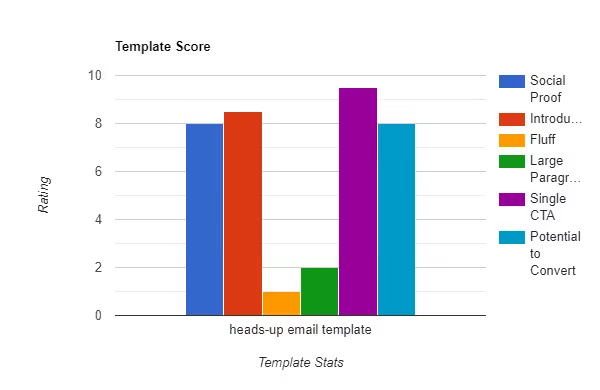
Template rating on a few factors:

  • Number of words (metric)
  • Social proof (8/10)
  • Introduction (8.5/10)
  • Fluff (1/10)
  • Large paragraphs (2/10)
  • Single CTA (9.5/10)
  • Potential to convert (8/10)

Deliverability Score scale

  • Spam word use (1/10)
  • Complex sentence use (0)
Heads-up Email Template

More Heads-Up Email Template Examples

1) Policy Change Heads-Up

Subject: Important Update: Policy Adjustment

Hi {recipient name},

I'm reaching out to give you a heads-up about an upcoming change to our refund policy. Starting next month, we'll be streamlining the process to enhance efficiency. Rest assured, we'll provide all necessary details beforehand.

Let me know if you have any questions or concerns.

Regards,
{Sender's name}

2. Meeting Reschedule Heads-Up

Subject: Heads-Up: Meeting Reschedule

Hi {recipient name},

Just a heads-up that we need to reschedule our upcoming meeting from Thursday to Friday at the same time due to unexpected circumstances. I apologize for any inconvenience this may cause and appreciate your flexibility.

Please confirm the new time works for you.

Thanks,
{Sender's name}

3. Service Downtime Heads-Up

Subject: Heads-Up: Scheduled Maintenance

Hi {recipient name},

I wanted to inform you about scheduled maintenance on our servers this weekend. It will start on Saturday at 10 PM and last approximately four hours. This should not affect your access, but I wanted to give you advance notice.

I'll keep you updated if there are any changes.

Best regards,
{Sender's name}

4. Product Launch Heads-Up

Subject: Heads-Up: Exciting New Product Launch

Hi {recipient name},

I wanted to give you a heads-up about an exciting new product launch coming your way next week. We've been working hard on this and are thrilled to share it with you soon.

Stay tuned for more details and how it can benefit you!

Best regards,
{Sender's name}

Best practices for heads up email

Best practices to get fluent with heads up emails.

  • Be Polite in the Introduction Line and Use Informal Lines to Grab Attention

Start your heads-up email with a polite and friendly greeting to set a positive tone. An informal approach, such as "Hey! I hope you are doing fine," can make your email feel more personal and engaging. This opening helps to create a connection with the recipient, making them more likely to read on.

  • Keep the Body Simple, Concise, and Informative

The body of your heads-up email should be straightforward and to the point. Use clear and simple language to convey your message effectively. Include key phrases that highlight the main purpose of the email, ensuring that the reader can quickly grasp the essential information. A concise email respects the recipient's time and increases the likelihood of your message being read and understood.

  • Focus on Relevance and Value

Ensure that the content of your email is relevant to the recipient and provides value. Explain why the information you are sharing is important and how it benefits them. Tailoring your message to address the recipient’s needs or interests can significantly enhance engagement and response rates.

  • Use Bullets or Numbered Lists for Clarity

When you have multiple points or pieces of information to share, consider using bullet points or numbered lists. This format makes the email easier to read and allows the recipient to quickly scan for important details. Structured information helps in retaining the reader’s attention and makes your message more digestible.

  • Include a Clear Call-to-Action (CTA)

End the body of your email with a clear and specific call-to-action. Whether you want the recipient to respond, schedule a meeting, or review a document, make your request explicit. A well-defined CTA guides the reader on what to do next and increases the chances of achieving your email’s goal.

  • Express Gratitude and Keep the Closing Short

Always conclude your email by expressing gratitude, acknowledging the recipient’s time and attention. A simple thank you, such as "Thanks for your time," shows respect and appreciation. Keeping the closing brief and courteous reinforces a positive impression and encourages future communication.

Take away tips for how to write a heads up email:

Some essential techniques to remember while constructing a heads-up email template:

  • Begin in a friendly manner and ask how they are doing. Undoubtedly, the format of the heads-up email is informal, but you need to carry on with professionalism.
  • Put effort into personalizing your emails. It gives the client a unique experience. Personalization helps you instantly connect with the audience.
  • Sounding confident in the emails is necessary. Smartlead.ai automates the flow of email, which looks more engaging. You can create 1000+ personalized emails on this platform.
  • Express your gratitude to the other person who delivered you the email. For example, ‘Thanks for your time.’

Table of Content

Subscribe to get all our latest blogs

Join us to elevate your outreach!

Thank you! Your submission has been received!
Oops! Something went wrong while submitting the form.

Frequently asked questions

When Should You Send a Heads Up Email?
+
A heads-up email should be sent whenever you need to inform recipients about upcoming events, changes, or important updates. This includes notifying about project deadlines, meetings, relocations, new policies, or any situation where providing advance notice can help the recipient prepare and respond appropriately.
What Are Some Key Elements to Include in a Heads Up Email?
+
A heads up email should include a clear subject line that indicates the email's purpose, a polite and professional greeting, and a concise body that delivers the necessary information succinctly. It should also include relevant details such as dates, times, and any actions required, express gratitude for the recipient's attention, and offer assistance by providing contact information for further questions.
How Can You Make a Heads Up Email More Effective?
+
To make a heads up email more effective, be clear and direct by stating the main point early in the email. Use bullet points to highlight key information for easy reading and personalize the message when possible to address the recipient’s needs or interests. Ensure readability by using short paragraphs and simple language, and consider sending a follow-up email if necessary to reinforce the message.
What Are Common Mistakes to Avoid When Sending a Heads Up Email?
+
Common mistakes to avoid when sending a heads up email include being vague, which can cause confusion due to a lack of clear details, and overloading the email with too much information, which can overwhelm the recipient and obscure the main message. Keeping the email concise and focused on essential information is crucial for effectiveness.
How Do You Send a Heads Up Email Template?
+

When you want to offer or receive information, a heads up email is an effective way to ensure clear and timely communication. Here’s how to effectively send a heads-up email:

  • Use Clear Subject Lines

Ensure your email subject line clearly indicates the purpose of the email. Phrases like "Upcoming Changes," "Important Update," or "Project Timeline" can immediately inform the recipient about the email's content.

  • Start with a Polite Greeting

Begin your email with a polite and friendly greeting. For example: "Hello [Recipient's Name], I hope you're doing well."

  • Provide the Information Concisely

In the body of the email, convey your message succinctly. For instance: "I wanted to bring to your attention that our business will be relocating to a new location next month. Please find the details below."

  • Express Gratitude and Offer Assistance

End your email by expressing gratitude and offering further assistance if needed. For example: "Thank you for your attention to this matter. If you have any questions or need further information, please feel free to contact me."

  • How to Express a Heads-Up in the Email?

When you want to share or receive information, you can use terms like "let" to indicate a heads-up email. For instance: "Please let me know how much time you'll need for that project."

  • Can You Just Say Heads-Up?

While you can use the term "heads-up" in casual conversation, it's better to provide context or a warning in emails to ensure clarity. This helps the recipient prepare for the information being shared.

  • Is It Correct to Say, "Hey! Just a Heads-Up" in Emails?

Using "Hey! Just a heads-up" can be appropriate in informal contexts. However, in professional settings, it's important to be more formal and explicit. For example: "I wanted to inform you that..."

  • How to Say "Just a Heads-Up" Professionally?

In a professional email, you can convey the message of "just a heads-up" by using phrases like "I wanted to bring to your attention" or "I wanted to inform you that." These phrases maintain a polite and informative tone while ensuring clarity.

Examples Include:

  • "It is my duty to let you know..."
  • "I thought it's important to inform you..."
  • "It's my responsibility to inform you..."
  • "Just so you know..."
  • "In case you weren’t aware..."
How to Say "Thank You for the Heads Up" Professionally?
+

In a professional email, you can express gratitude for a heads up by saying:

  • "Thank you for informing me."
  • "I appreciate the heads up."
  • "Thanks for letting me know."

These phrases show appreciation while maintaining professionalism and respect for the recipient's effort to keep you informed.

When should you send a second interview follow-up email?
+

You should send the second follow-up email as soon as possible. Ideally, it should be within 24 hours of sending the first follow-up email.

What things should you mention in your follow-up email?
+

First of all, thank the interviewer/interviewee for their time. You should mention the interview date and specific job title. Mention your interest in the job profile subtly and ask them to reach out to you for any clarifications.

What is the best interview follow-up template?
+

Feel free to use the sample interview follow-up email template given above. You can also use Smartlead.ai for numerous email templates and follow-up automation.

The Outbound OS your competitors wish they had

Try Smartlead's AI-led outbound system today.